
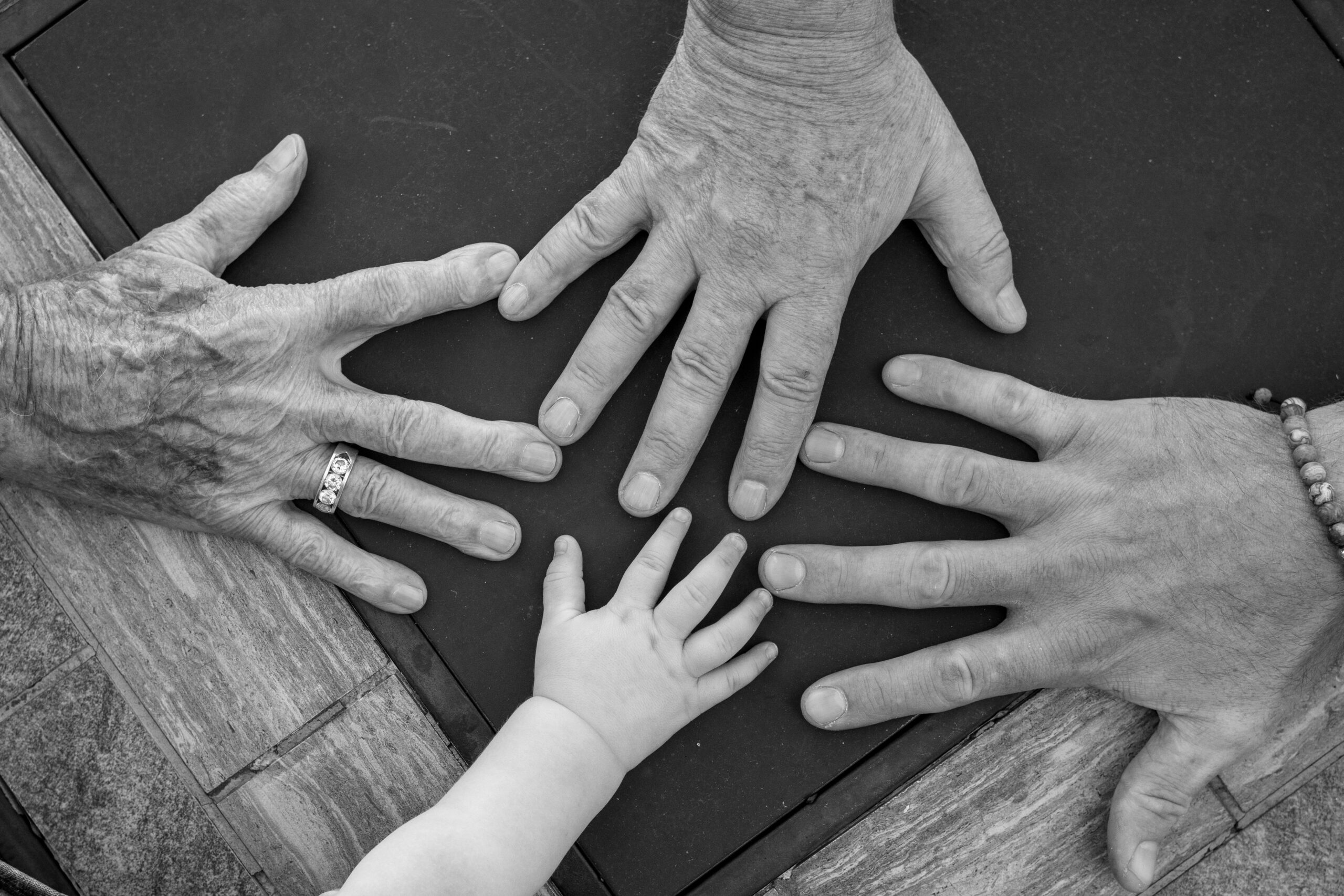

Who do you want to be when you grow up?
When was the last time you were asked that question? Probably not recently enough.
It’s a question we reserve mostly for small children, and the answers are often wildly creative or ambitious.
The older we get, the less you hear answers like “ballerina,” “astronaut,” or “movie star.” The answers become more practical, shaped by a desire for wealth, stability, or respect.
Lawyer. Doctor. Engineer. More recently: tech founder, entrepreneur, or influencer.
At some point, though, the question stops getting asked altogether. The assumption is that you’ve made it already.
Congrats, you’re grown up. All done.
But are you, really?
Lessons from Tia
My great aunt, Sadie Mae (affectionately known as “Tia”), one of my absolute favorite humans to ever walk this Earth, was curious and delighted by new things well into her 80s and 90s. I’d argue it’s one of the things that kept her young and active for so long.
One year, we bought her a CD player so she could listen to Ella Fitzgerald and Mahalia Jackson. She had never seen a CD, much less a player before. She didn’t know what all the buttons and knobs were for. But she was undaunted.
She learned how to use it, and seeing her face light up when the music came on was priceless.
She would always say, “I love my DC player,” with a big grin.
She never did call it the right name, but it didn’t matter. She was still learning and finding new things to delight in decades after people stopped asking about her dreams for the future.
When the Past Overshadows Possibility
Over the years in the nonprofit sector, I’ve observed many colleagues struggling to hold onto their own sense of wonder, curiosity, and openness to change.
Often veterans in the sector, with decades of work behind them, they have become — by their own admission — bitter and burned out.
Here’s the thing.
This work can be beautiful and joyful. It can also be heartbreaking and hard.
It’s understandable to fray around the edges over time. To speak of the old days with nostalgia and fear the challenges of the present moment, where uncertainty and rapid change can loom like a dark cloud.
As I think about team members struggling in this way, I wonder:
What does she still look forward to?
What delights has he yet to discover in this work?
What could be their “DC player”?
Looking back at cherished memories isn’t a bad thing. It can spark gratitude, perspective, and reflection.
The challenge comes when we pit the past against the present moment.
Advantage often goes to the past, as hazy memory softens the sharp points and dulls old disappointments. If time heals wounds, the path probably wasn’t as easy as we now recall.
Yet the longing is real, and it shapes how we experience the present.
In a culture that idolizes youth and fears getting older, it’s easy to look back with longing. To wish for a time when it seemed like your whole life was in front of you. When you could dream about being a ballerina, going to space, or taking home an Oscar for your work.
What We Leave Behind
I’d like us to think for a moment about legacy.
Legacy is something you cannot build overnight, and youth alone cannot cultivate.
It is built slowly, over time.
It requires patience, perseverance, and a steadiness that pushes against the frenzied pace of our current world.
Legacy is also delicate.
So many “heroes” have fallen in recent years, their life’s work crumbling under the weight of their own decisions and behaviors. While that drama plays out nationally and globally, it also happens quietly inside companies and organizations every day.
As leaders, we can’t rest solely on the laurels of what we built in the past. We have to remain curious. We have to keep dreaming bigger.
If you believe your best work is behind you, then it is.
If you believe your best work is still in front of you, it is.
We need relationships with colleagues who are new to the work so we can continue learning as we encourage their growth and development.
Revisit an old idea with a fresh perspective.
Collaborate with a new partner.
See what new magic becomes possible together.
Stagnation breeds bitterness.
Your legacy is not built by three chosen reviewers. It’s built through the collective of people and experiences you encounter across your entire journey. How you treat people in your thirtieth year of work matters just as much as how you showed up in your first year. Arguably more.
You are a model now.
Other people are watching you for cues on what is appropriate, decent, sustainable, and aspirational.
How can we build a new generation of impactful leaders if their examples are exhausted and disillusioned?
As organizational leaders, particularly in the nonprofit sector, we have an opportunity to create a new paradigm. The disillusioned, exhausted, “martyr of the movement” archetype has not served us well — individually or collectively.
What Will We Create?
What if part of our collective legacy is building healthier organizations and a more sustainable sector? You decide if and when you’re done growing.
We all come into this world with the audacity to dream, with imaginations expansive enough to build almost anything. We can choose to nurture that spirit for our entire lives.
Maybe you won’t become a ballerina or win an Oscar.
Perhaps going to the moon isn’t in the cards.
But what is available to each of us is the opportunity to embrace something new that brings us joy and delight.What might become possible if we used that same spirit to build our sector in a fresh, healthier way?
Who do you want to be when you grow up?
Let us follow the inspiration of Sadie Mae.
Our DC players are waiting.
What is the legacy you would be most proud of leaving behind?
And what opportunities do you have today to align more fully with that vision?


